
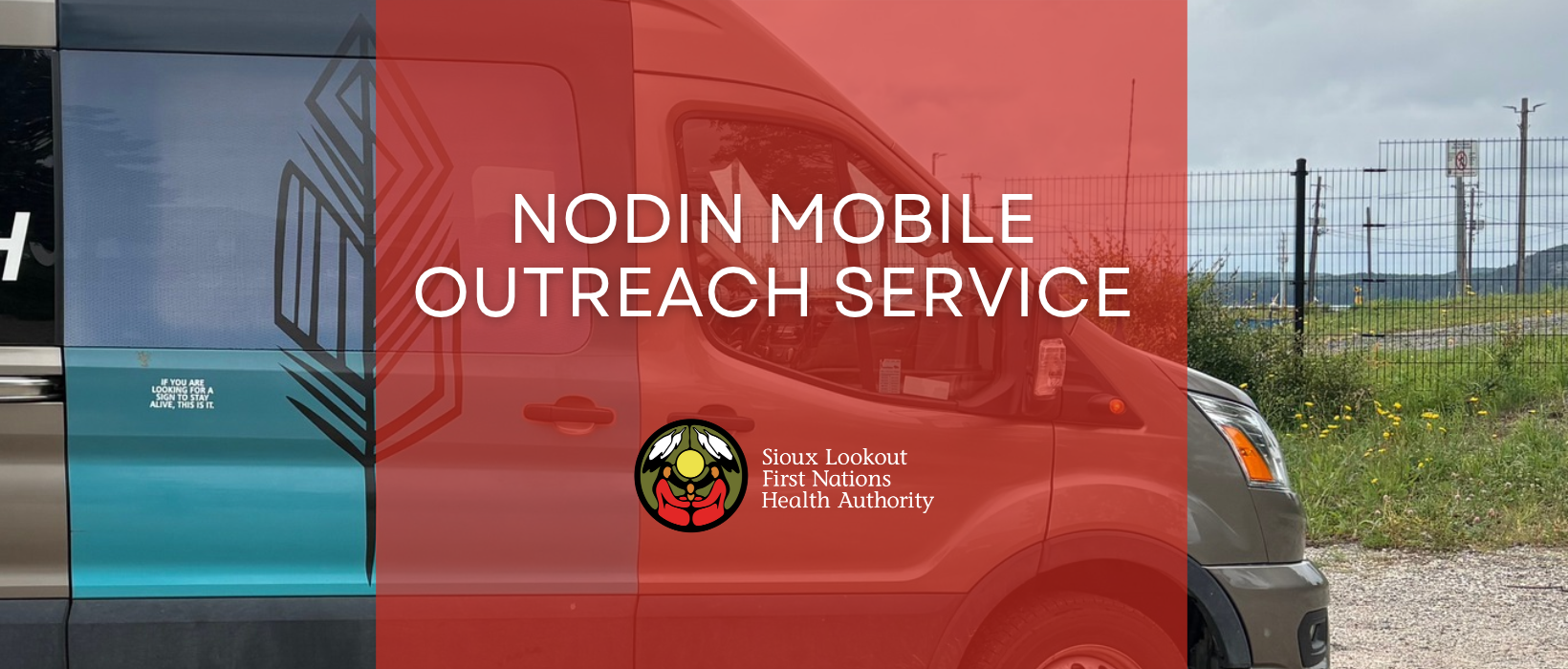
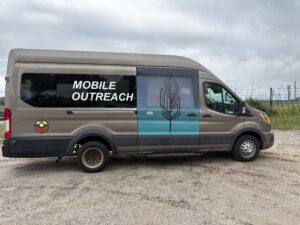
Nodin’s Mobile Outreach Service launched the Mobile Outreach Service in 2020. It began as
a pilot project in collaboration with other service providers, including the Northwestern Health Unit
(NWHU), the Sioux Lookout detachment of the Ontario Provincial Police (OPP), and the Canadian Mental
Health Association, Kenora Branch.
Although the pilot project ended in 2024, the Mobile Outreach Service continues to provide flexible,
client-centred support to individuals residing in Sioux Lookout who may be experiencing unstable
housing, substance use, or mental health challenges, and who are unable to access or navigate the
health care system through traditional streams. The Service focuses on immediate intervention, harm
reduction, advocacy, and connection to ongoing care, helping clients access supports when and where
they need them.
The goals of the Service include collaborating with internal and external service providers for timely
access to care, and enhancing access to primary care, harm reduction, and crisis response, thus reducing
the number of incidents that result in emergency department visits and criminal charges.
The Mobile Outreach Service comprises two case managers who work Monday to Friday, from 8:30 a.m.
to 4:30 p.m., with some flexibility in their schedules to accommodate client needs. The team can be
reached at 807-737-6233 or by email at mobileoutreachteam@slfnha.com.
Core Services and Successes
-
- Improved Access to Care: Provides and facilitates transportation to medical, mental health,
addictions, hospital, shelter, airport, and other essential appointments, helping clients overcome
transportation and mobility barriers.
- Improved Access to Care: Provides and facilitates transportation to medical, mental health,
-
- Immediate Outreach and Harm Reduction: Conducts regular community check-ins and provides
food, water, hygiene supplies, seasonal clothing, blankets, and other life necessities. The team
responds quickly when individuals are in distress and connects them with emergency services when
needed.
- Immediate Outreach and Harm Reduction: Conducts regular community check-ins and provides
-
- Strong Client Advocacy: Accompanies clients to appointments and advocates on their behalf with
health, addictions, social, probation, housing, and other services. The team helps ensure clients’
needs and concerns are heard, particularly when they have difficulty navigating systems
independently.
- Strong Client Advocacy: Accompanies clients to appointments and advocates on their behalf with
-
- Continuity of Care: Provides ongoing case management, follow-up, appointment reminders, home
visits, safety planning, and practical support. This helps clients remain connected to services and
reduces the likelihood of individuals falling through gaps in the system.
- Continuity of Care: Provides ongoing case management, follow-up, appointment reminders, home
-
- Successful Repatriation and Reconnection: Supports clients who are stranded in Sioux Lookout or facing
barriers related to missed appointments, flights, accommodations, or travel. The team works with
Non-Insured Health Benefits, hostels, Chief and Council, and other partners to help clients safely
return to their home communities and reconnect with family and community supports.
- Successful Repatriation and Reconnection: Supports clients who are stranded in Sioux Lookout or facing
-
- Strong Circle of Care: Maintains collaborative relationships with the Ontario Provincial Police, the
Northwestern Health Unit, the Rapid Access Addictions Medicine Clinic, Sioux Lookout Meno Ya
Win Health Centre, the Emergency Shelter, the Kenora District Services Board, the Friendship
Centre, Sunset Women’s Aboriginal Circle, the Ontario Native Women’s Association, the Learning
Centre, and surrounding First Nations. These partnerships strengthen communication,
coordination, and continuity of care.
- Strong Circle of Care: Maintains collaborative relationships with the Ontario Provincial Police, the
-
- Low-Barrier Access: Clients can access Mobile Outreach directly, without a formal referral. This
allows the team to respond during brief opportunities when a client is ready to accept support,
helping build trust and engage individuals who may otherwise remain disconnected from services.
- Low-Barrier Access: Clients can access Mobile Outreach directly, without a formal referral. This
-
- Police and Emergency Service Diversion: Early intervention, transportation, basic necessities, and
connection to appropriate supports can prevent situations from escalating to police or hospital
involvement. The team also works alongside emergency services to identify safer and more
appropriate options for clients.
- Police and Emergency Service Diversion: Early intervention, transportation, basic necessities, and
Overall Impact
The Mobile Outreach Service has strengthened the community’s ability to respond to individuals who
experience significant barriers to accessing traditional services. Through immediate outreach, advocacy,
transportation, harm reduction, case management, and strong community partnerships, the Service
helps clients access essential care, remain connected to services, and return safely to their home
communities when appropriate.
The Service has also contributed to reducing service gaps, supporting safer outcomes, and diverting
avoidable pressure from police, hospitals, and emergency services. Most importantly, Mobile Outreach
provides a consistent and trusted point of contact for individuals who may otherwise have limited
connection to the health and social service system.
