
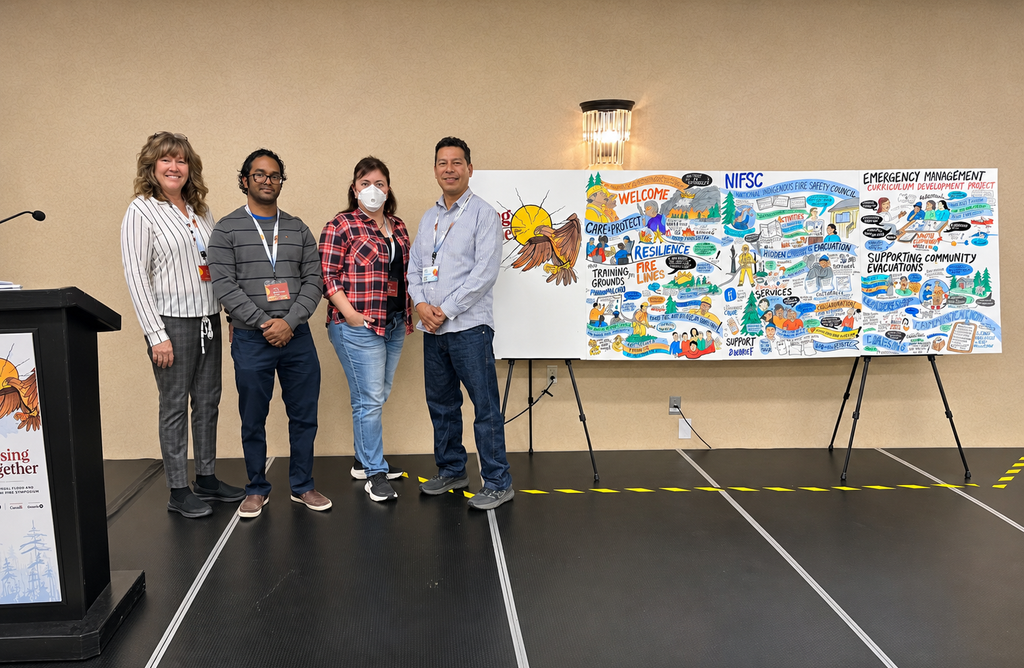
On November 3, 2026, the Sioux Lookout First Nations Health Authority (SLFNHA) brought together perspectives from Safe Communities, Nursing, Physician Services, Nodin Mental Health Services, and Anishinabewaadiziwin for a healthcare panel at the Rising Together Flood and Fire Symposium held in Thunder Bay. Titled “The Hidden Impacts of Evacuation: Physical and Mental Health Consequences,” the discussion examined how displacement affects the health and wellbeing of First Nations people and communities.
Evacuation can protect people from an immediate threat, but leaving home can also disrupt access to healthcare, daily routines, family supports, and cultural connections. For people managing ongoing health conditions, Elders, and families, these disruptions can create additional challenges, particularly when an evacuation continues for an extended period.
The panel provided an opportunity to reflect on the 2026 evacuation season and consider how health services and emergency response partners can better support community-identified needs. Access to care, suitable accommodations, food, clear communication, and emotional support are closely connected to people’s wellbeing while they are away from home.
Community leadership and local knowledge are essential to this work. Involving community-designated representatives in planning and decision-making helps partners understand priorities, identify gaps, and adapt supports as circumstances change. Cultural, spiritual, and language needs must also be considered alongside physical and mental health needs.
The discussion reinforced the importance of planning for health and wellbeing from the beginning of an evacuation and continuing that support through the return home. Repatriation is an important step, but communities may still need assistance reconnecting people with care, restoring services, and addressing the effects of displacement. Joint planning and follow-up on lessons learned can help strengthen future responses.
The Social Emergency Liaison Officer – Safe Communities brought the panel idea forward through his involvement with the symposium planning group and moderated the discussion. His contributions helped create an opportunity for SLFNHA programs to share their perspectives on the health impacts of evacuation.
Miigwetch to the panel participants, symposium organizers, and partners for contributing to this conversation and supporting continued work with First Nations communities to strengthen emergency preparedness, response, and recovery.
