Best Practice Spotlight Organization (BPSO®)

Welcome to the Sioux Lookout First Nations Health Authority’s (SLFNHA) Best Practice Spotlight Organization page. This page will provide you with information about SLFNHA’s journey to becoming an Indigenous-focused BPSO, in partnership with the Registered Nurses’ Association of Ontario (RNAO).

About the BPSO Program

What is BPSO®?

What is BPSO®?

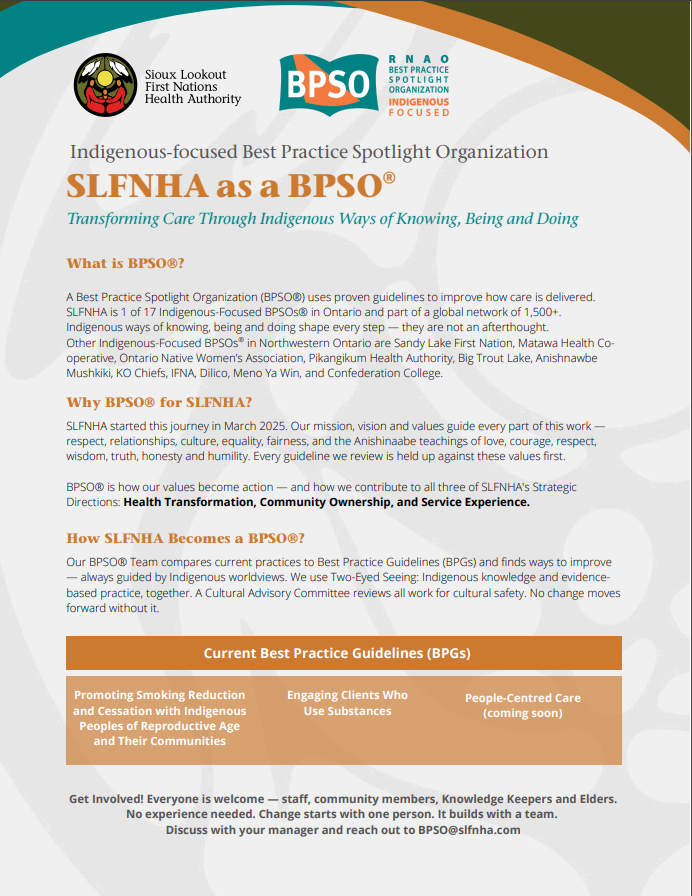
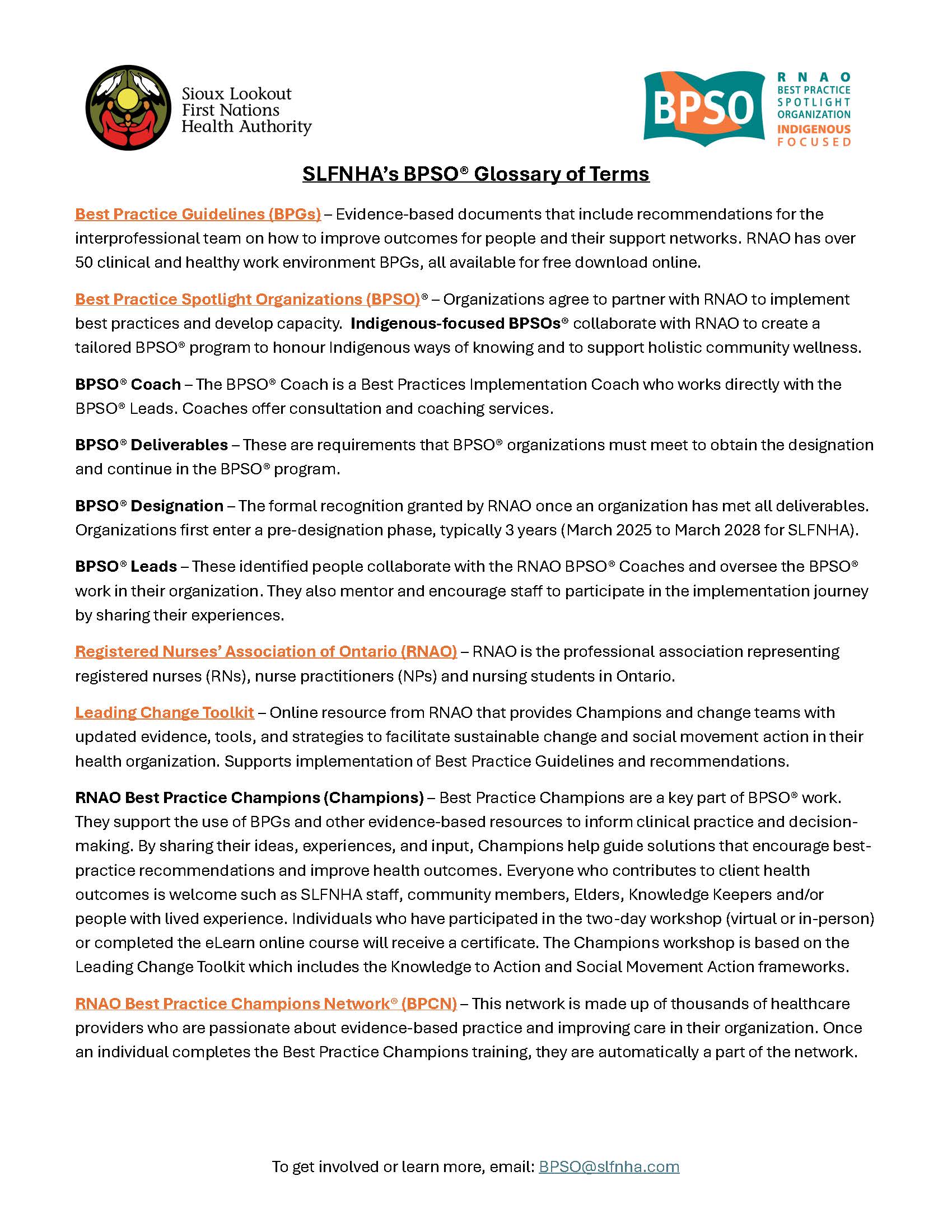
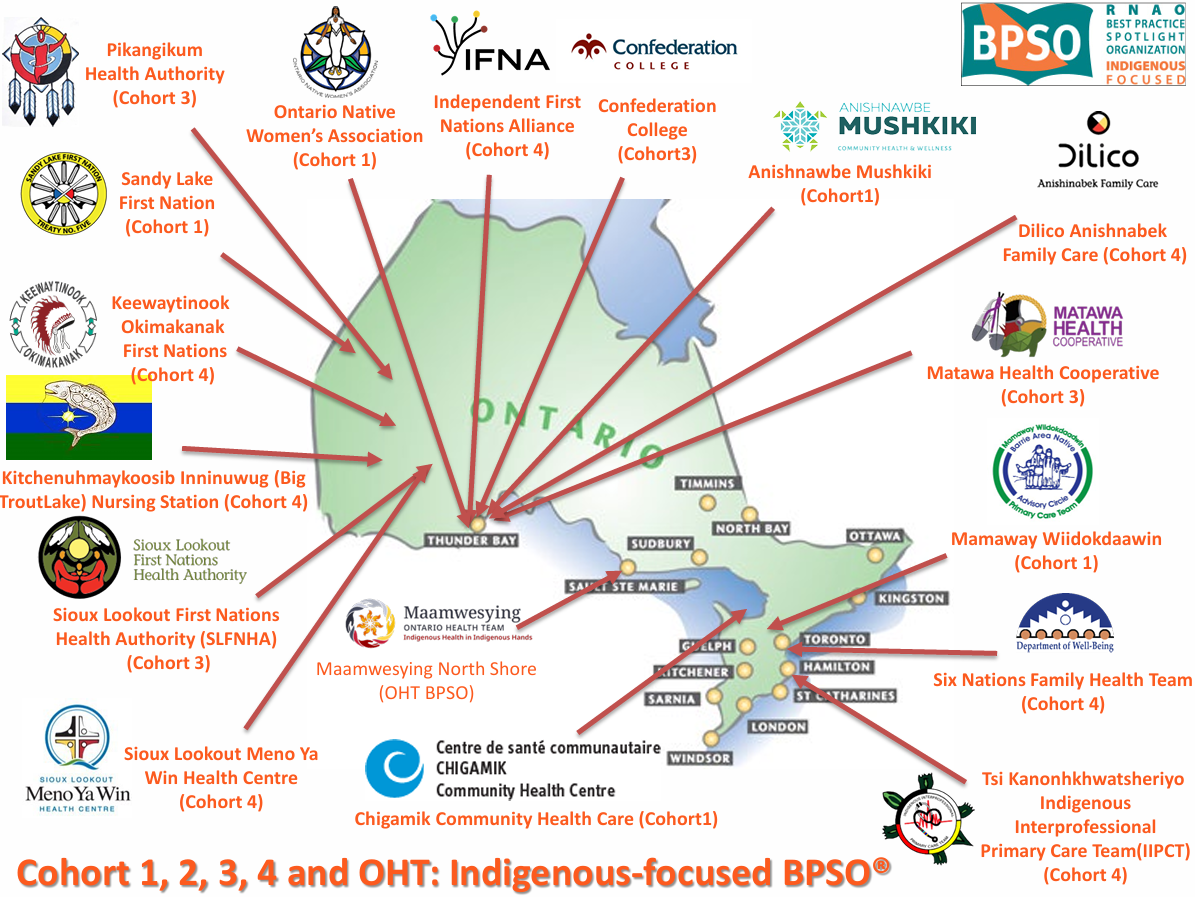
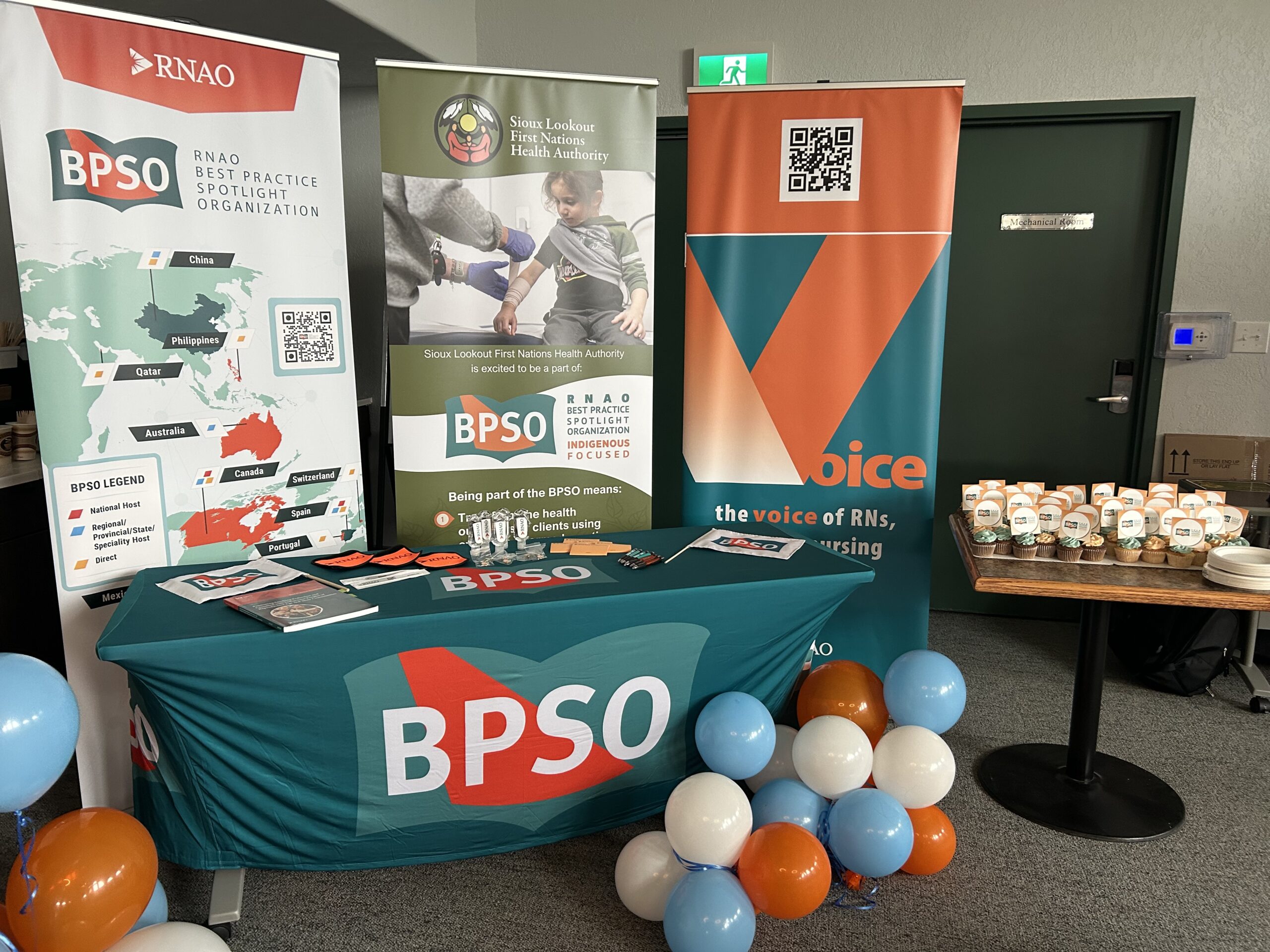
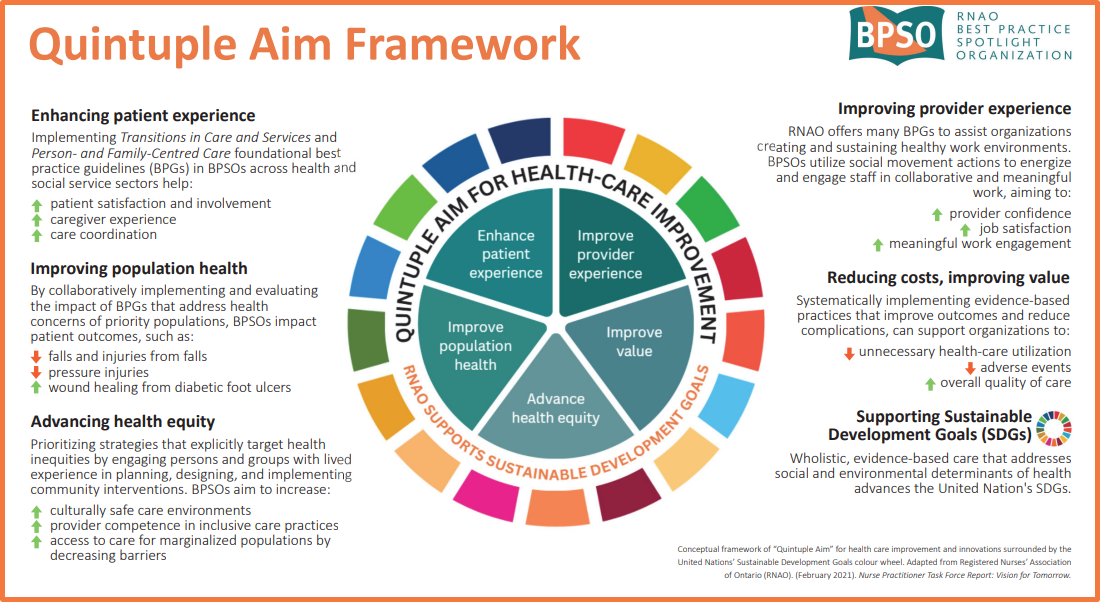
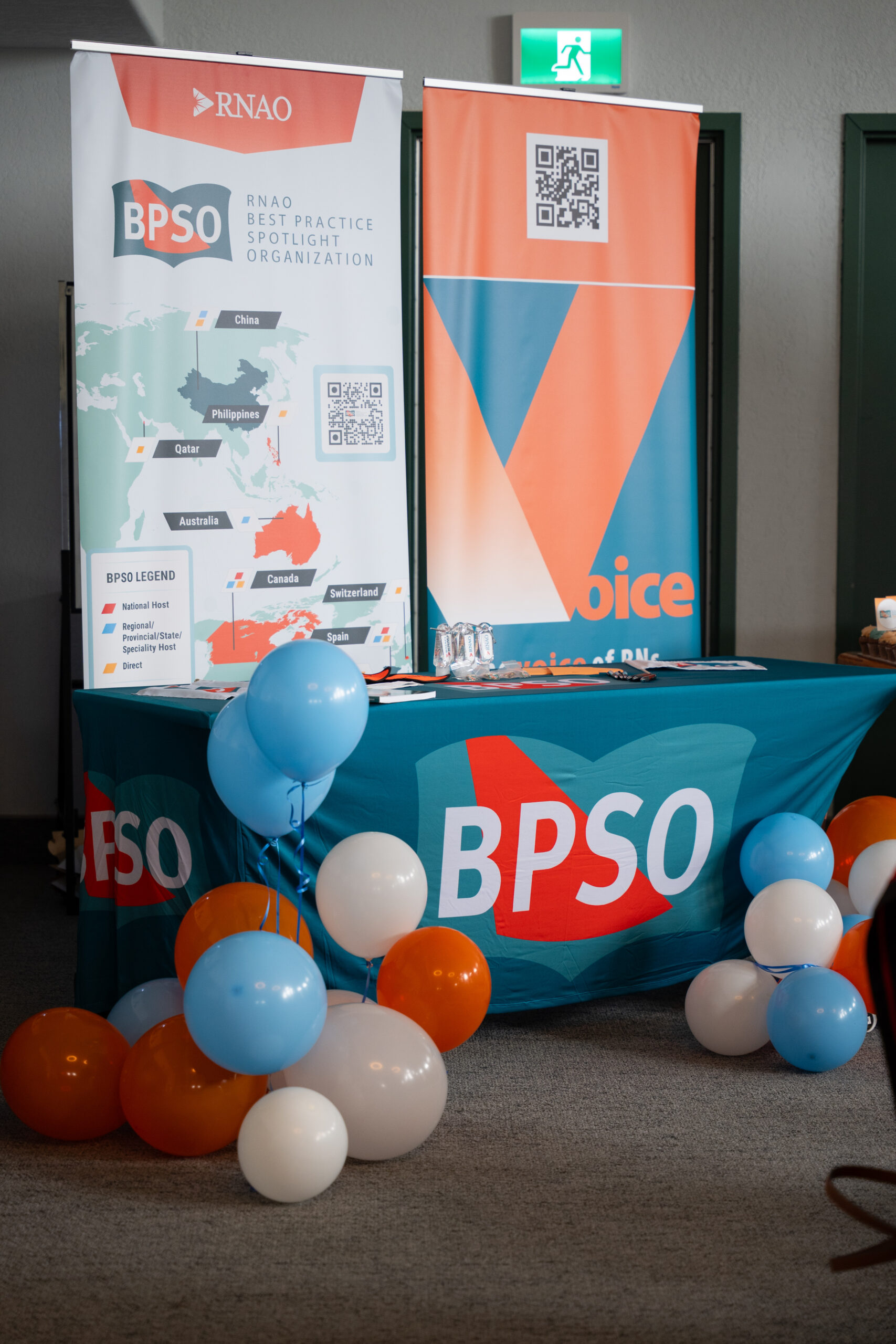
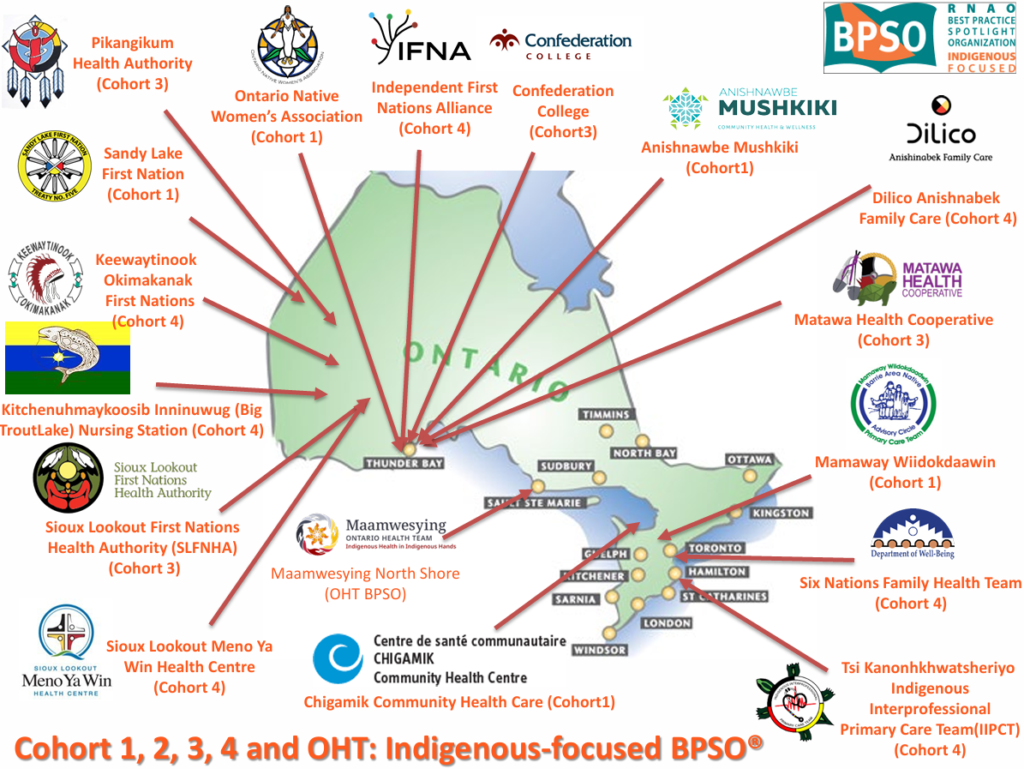
A Best Practice Spotlight Organization (BPSO®) uses proven guidelines to improve how care is delivered. The Indigenous-focused BPSO® program is run by the Registered Nurses’ Association of Ontario (RNAO) with Indigenous ways of knowing, being and doing shaping every step. Indigenous-focused BPSOs® collaborate with RNAO to create a tailored BPSO® program to honour Indigenous ways of knowing and to support holistic community wellness. SLFNHA is part of a global network of over 1,500 BPSOs® across multiple countries and is 1 of 17 Indigenous-Focused BPSOs® in Ontario. 
 

What are Best Practice Guidelines (BPGs)?

What are Best Practice Guidelines (BPGs)?

Best Practice Guidelines (BPGs) are evidence-based documents that include recommendations for nurses, interprofessional health teams, educators, leaders and policy makers on how to improve outcomes for people and their support networks. RNAO has developed over 50 BPGs, all available for free download online. 
 

Why BPSO® for SLFNHA?

Why BPSO® for SLFNHA?​

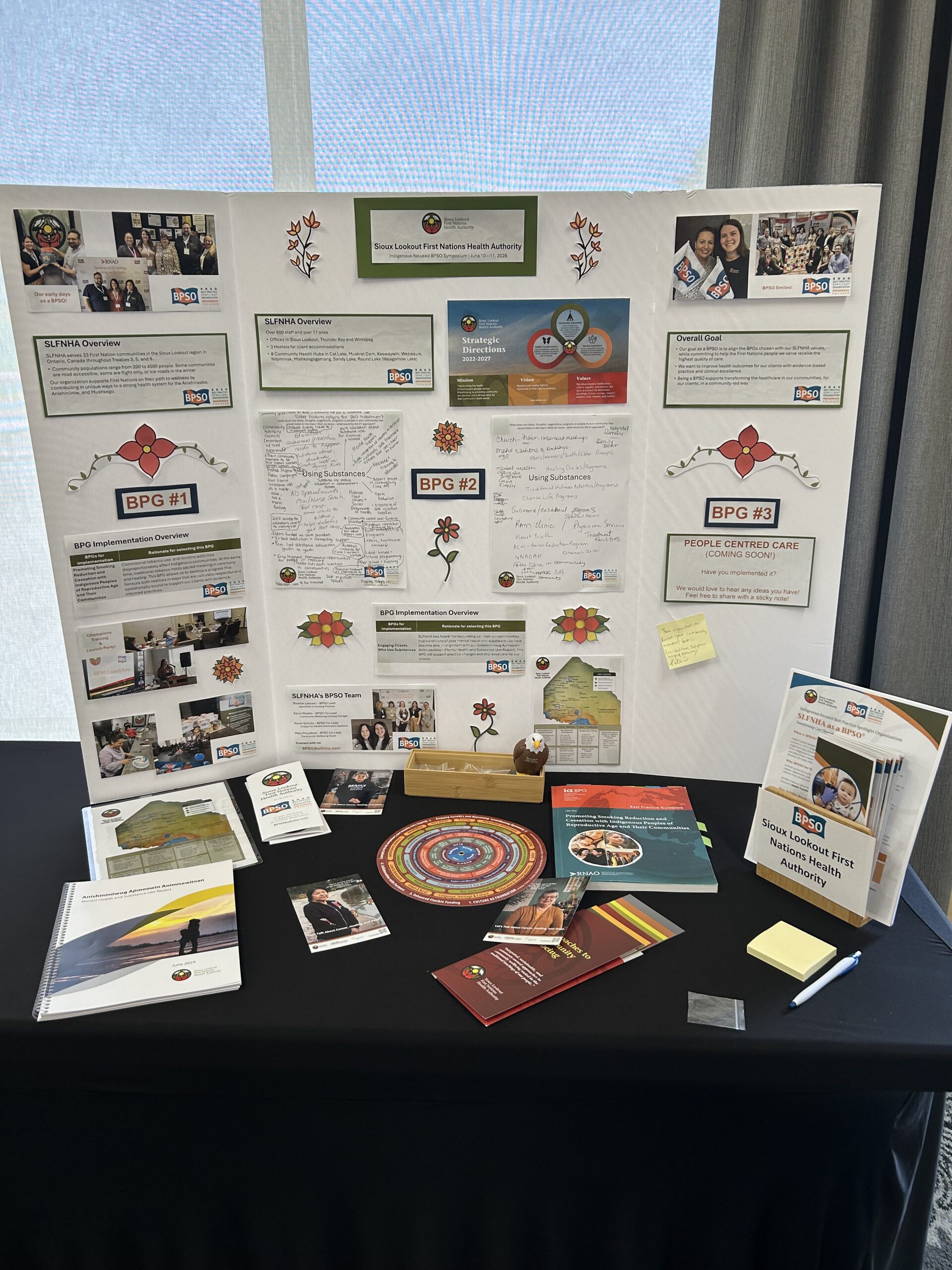
SLFNHA started this journey in March 2025. Our mission, vision and values guide every part of this work — respect, relationships, culture, equality, fairness, and the Anishinabe teachings of love, courage, respect, wisdom, truth, honesty and humility. Every guideline we review is held up against these values first. BPSO® is how our values become action — and how we contribute to all three of SLFNHA’s Strategic Directions: Health Transformation, Community Ownership, and Service Experience.

How SLFNHA Becomes an Indigenous-focused BPSO

How SLFNHA Becomes an Indigenous-focused BPSO​

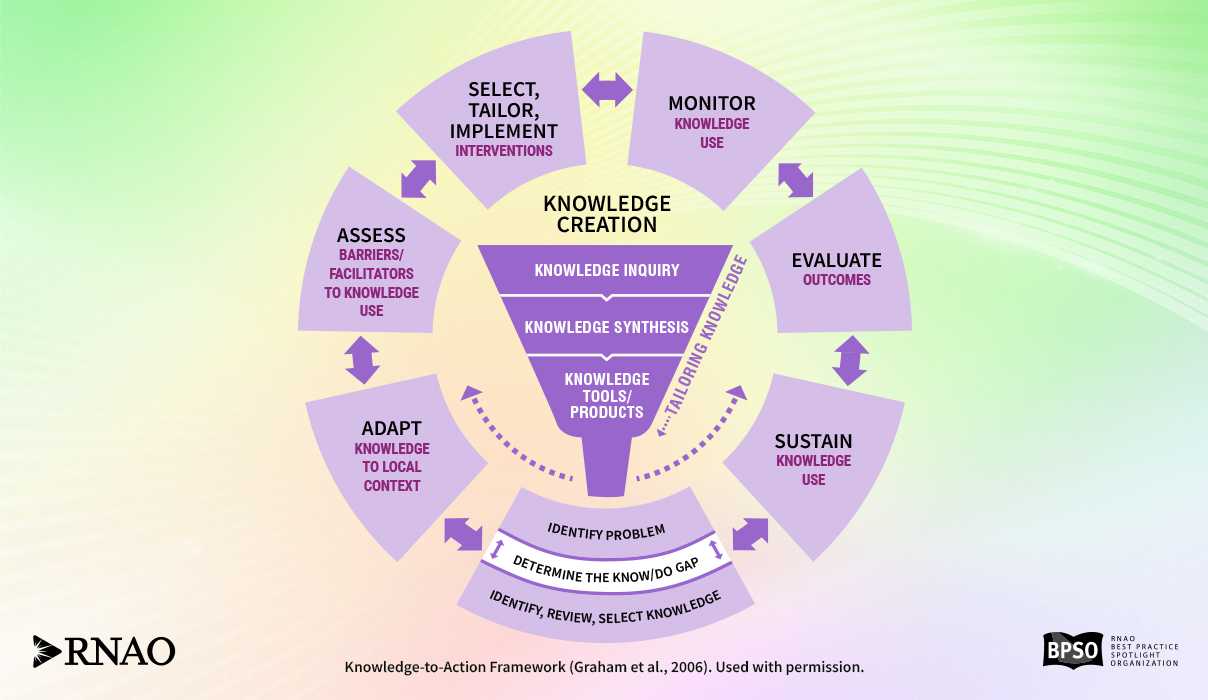
SLFNHA and our BPSO® Team choose relevant Best Practice Guidelines (BPGs), compare current practices against evidence-informed recommendations, and look for ways to improve. We use Two-Eyed Seeing – Indigenous knowledge and evidence-based practice – to always be guided by Indigenous worldviews. A Cultural Advisory Committee reviews all work for cultural safety. No change moves forward without it.
 
Current Best Practice Guidelines in SLFNHA

Current Best Practice Guidelines in SLFNHA

If you are interested in any of the three BPGs being implemented and want to be a part of this work, please email: BPSO@slfnha.com to get involved. Anyone is welcome!

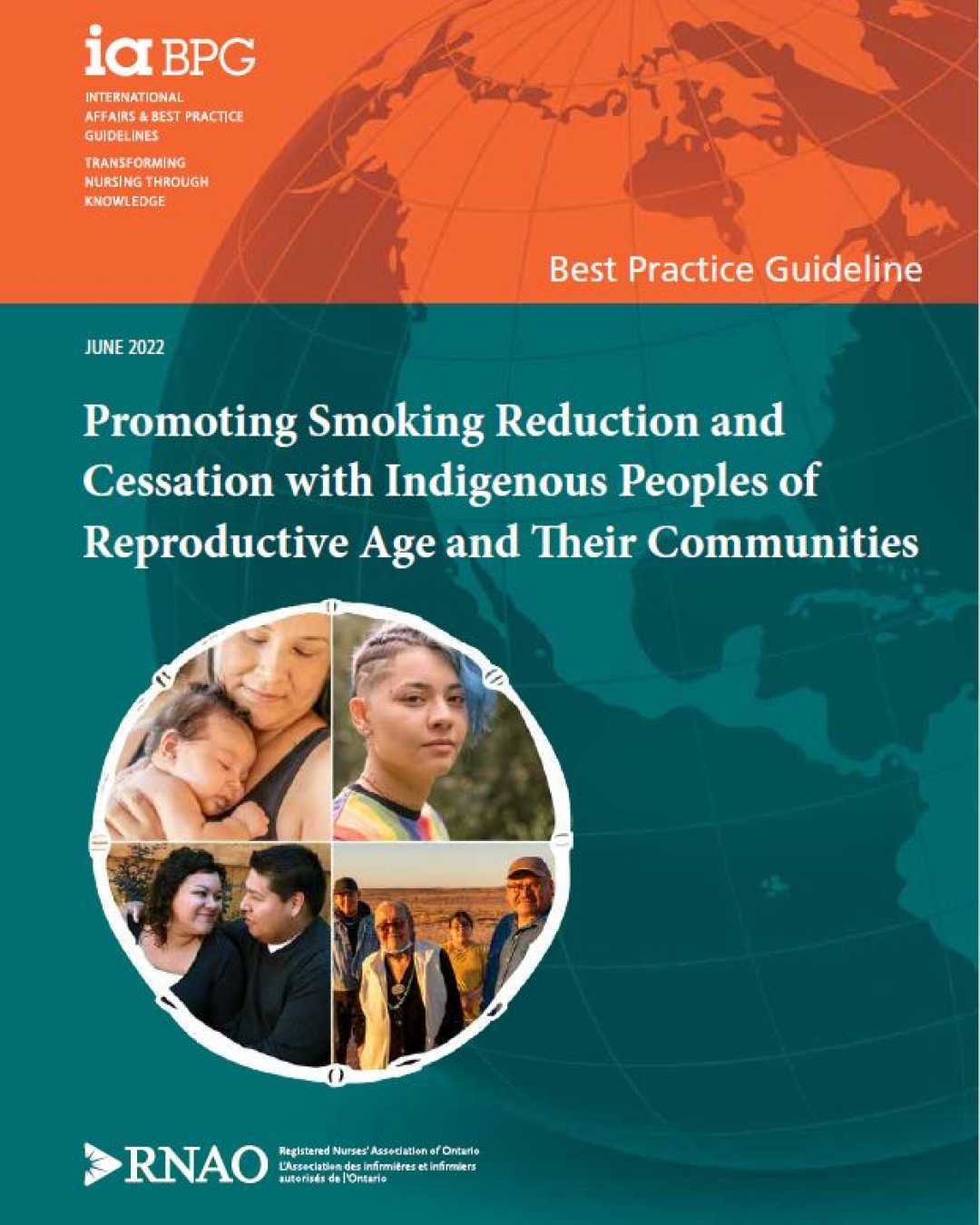
Smoking Reduction & Cessation

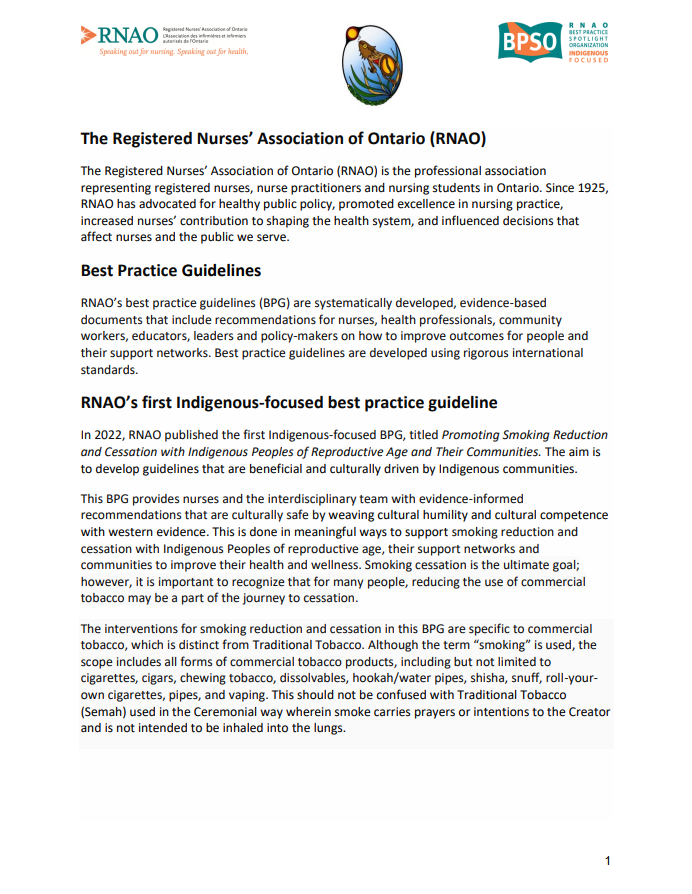
Commercial tobacco use is high across Kiiwetinoong, and it affects the health of families, babies, and future generations. This guideline was written with and for Indigenous Peoples, so it respects the difference between commercial tobacco and sacred tobacco and its place in ceremony. It gives our teams practical ways to support people who want to cut back or quit — approaches we can adapt to each client and community’s needs.

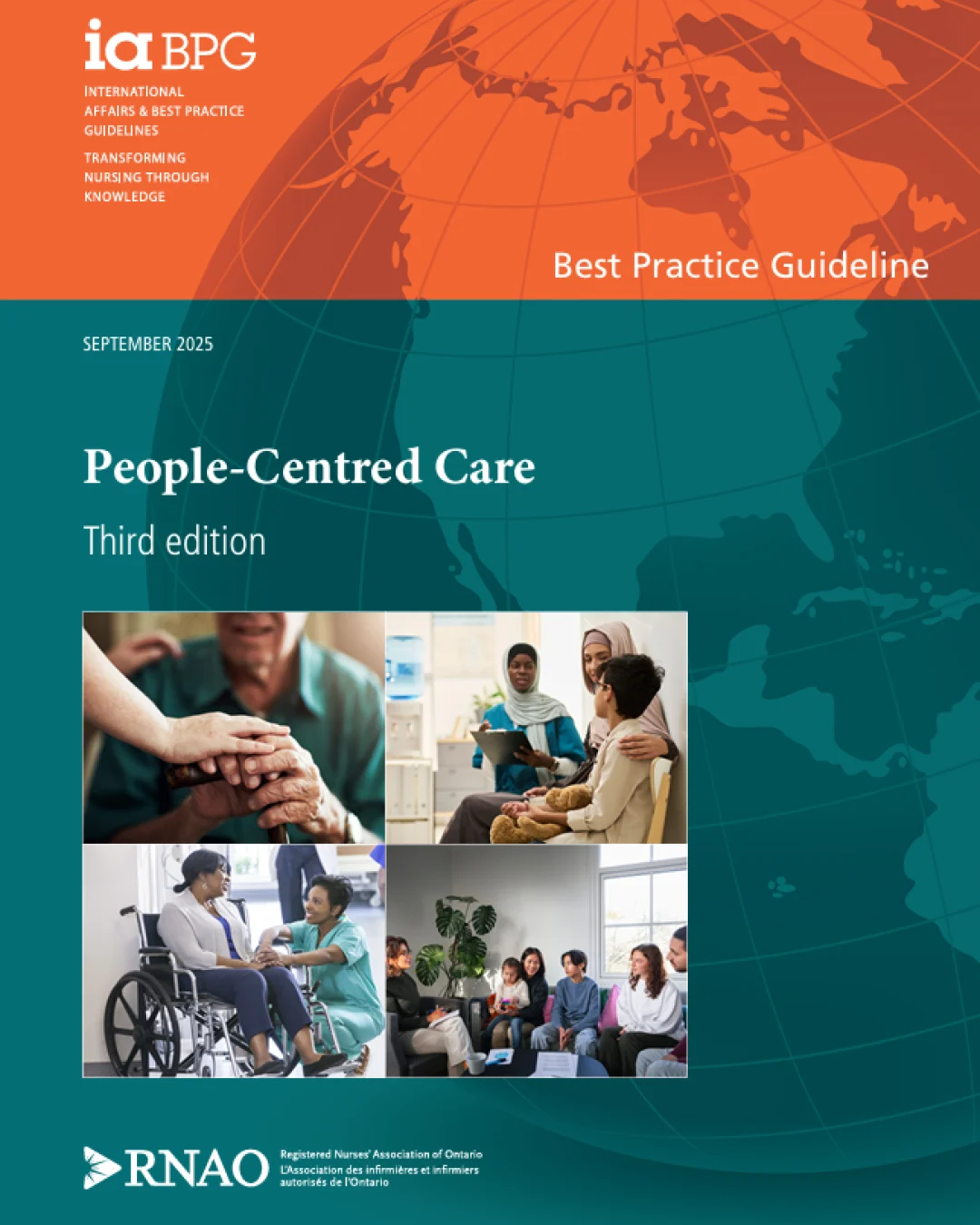
People-Centred Care

This guideline puts clients at the centre of their own care. It guides our staff to work with clients as partners — sharing information openly, offering real choices, and involving clients and their families in building their care plans. It also helps us provide consistent, culturally safe care across our programs, so that clients experience the same respect and quality even when they can’t always see the same provider.

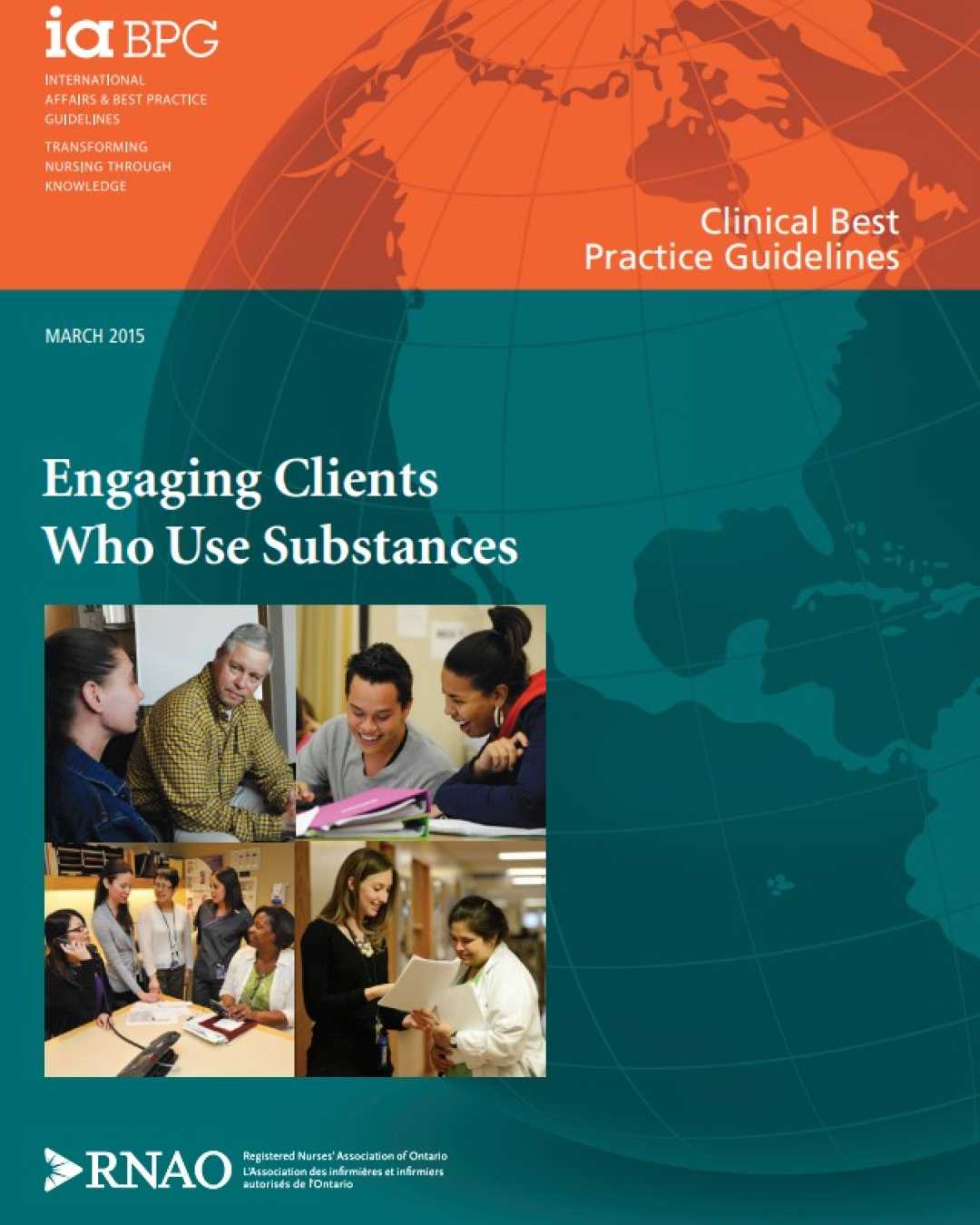
Engaging Clients Who Use Substances

Substance use is one of the most pressing health concerns in our region, and how people are treated when they reach out makes a difference. This guideline gives our staff clear direction on meeting clients with respect instead of judgment, using harm reduction and trauma-informed approaches. In small communities where stigma can stop someone from asking for help, building trust is what keeps people connected to care.

Smoking Reduction & Cessation

Commercial tobacco use is high across Kiiwetinoong, and it affects the health of families, babies, and future generations. This guideline was written with and for Indigenous Peoples, so it respects the difference between commercial tobacco and sacred tobacco and its place in ceremony. It gives our teams practical ways to support people who want to cut back or quit — approaches we can adapt to each client and community’s needs.

View BPG

People-Centred Care

This guideline puts clients at the centre of their own care. It guides our staff to work with clients as partners — sharing information openly, offering real choices, and involving clients and their families in building their care plans. It also helps us provide consistent, culturally safe care across our programs, so that clients experience the same respect and quality even when they can’t always see the same provider.

View BPG

Engaging Clients Who Use Substances

Substance use is one of the most pressing health concerns in our region, and how people are treated when they reach out makes a difference. This guideline gives our staff clear direction on meeting clients with respect instead of judgment, using harm reduction and trauma-informed approaches. In small communities where stigma can stop someone from asking for help, building trust is what keeps people connected to care.

View BPG

Best Practice Champions

Best Practice Champions

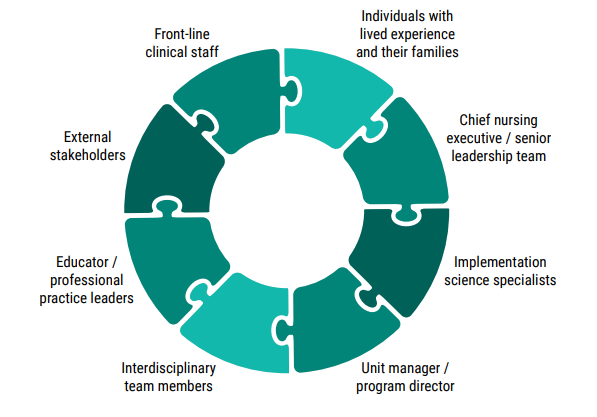
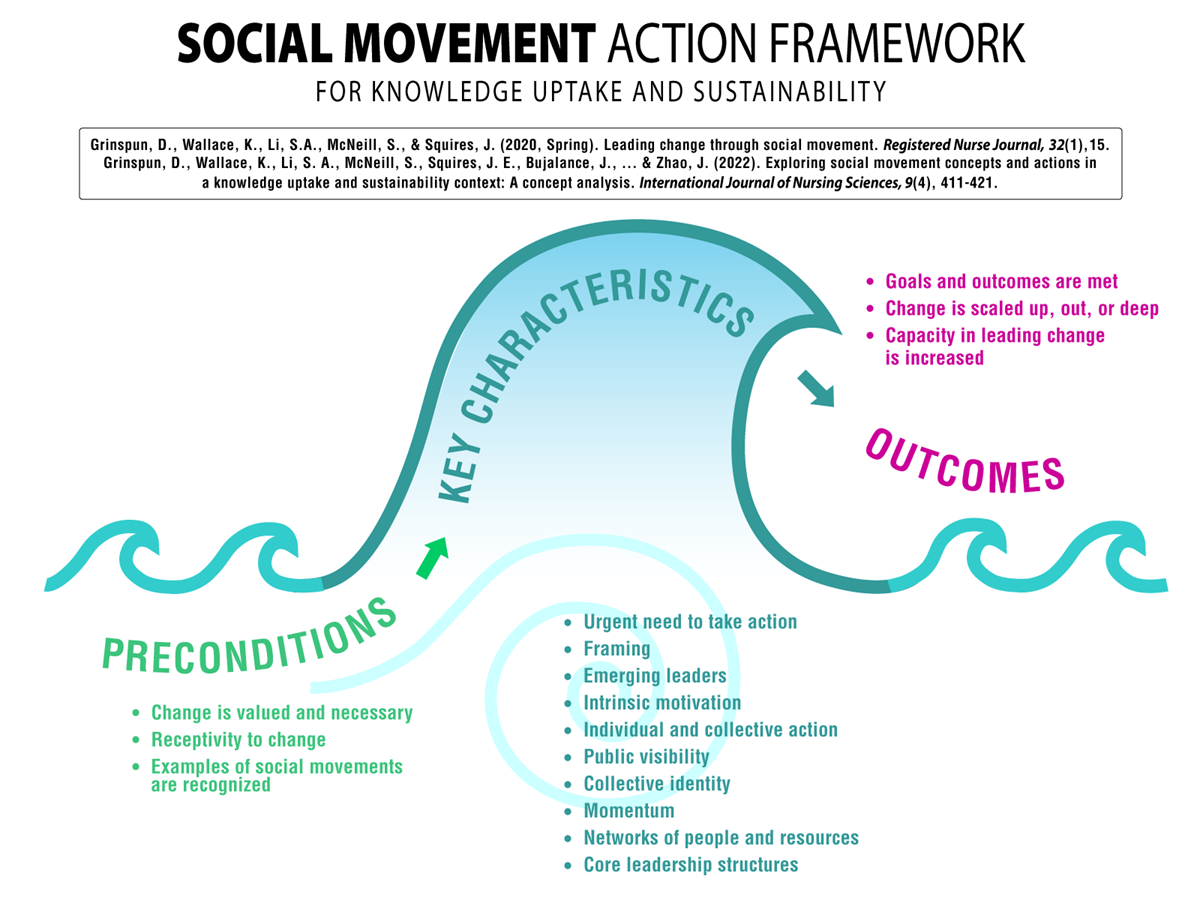
Best Practice Champions are a key part of BPSO® work. They share their ideas, experiences and input to help guide solutions that encourage best-practice recommendations and improve health outcomes. Everyone who contributes to client health outcomes is welcome — staff, community members, Knowledge Keepers and Elders. A mix of roles and experiences makes this work stronger. Change starts with one person, and it builds with a team.

To get involved, email: BPSO@slfnha.com

Learn more: Best Practice Champions Network®

In The News
Resources